
Blog posts tagged "cloud"

The widespread shift to remote working in response to the COVID-19 pandemic has been a disruptive change for countless businesses; some 13% of organisations say they have faced major disruption (1). But at Canonical, remote working has long been the status quo for many of our teams. In spite of the challenging circumstances in which
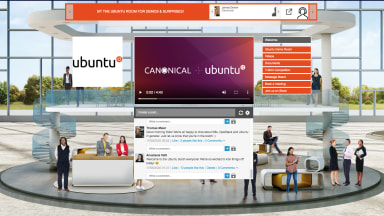
The wait is over – KubeCon & ClouNativeCon Virtual EU 2020 is finally here and we’re so thrilled to open our booth’s proverbial doors to all you fellow Kubernetes folks! We’ve already mentioned a couple of things about what you can expect to find at the Canonical and Ubuntu booth at KubeCon this year, but
Just like countless other business functions, cloud delivery has now shifted entirely to remote working for now and perhaps longer term. Canonical has been a remote-first company for some time, so we thought we’d take this opportunity to share some of the best practices we’ve learned along the way. Communication Effective communication be
Register for the event Who is this event for? After the huge success of its latest virtual event on Kubernetes for the EMEA region, Canonical brings its expertise to the US with another educational discussion. On July 31st, Canonical’s panel of experts come together to share their insights from years of working with developers and
This article originally appeared on Joshua Powers’ blog Ubuntu is the industry-leading operating system for use in the cloud. Every day millions of Ubuntu instances are launched in private and public clouds around the world. Canonical takes pride in offering support for the latest cloud features and functionality. As of today, all Ubuntu

Using open source software significantly reduces the total cost of ownership (TOC) of your IT infrastructure. Over the last few years, we’ve seen more and more companies gradually moving to open source. Our latest research conducted through The International Data Corporation (IDC) shows that 70% of businesses are adopting open source soft
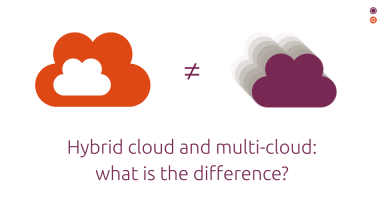
Hybrid cloud and multi-cloud are two exclusive terms that are often confused. While the hybrid cloud represents a model for extending private cloud infrastructure with one of the existing public clouds, a multi-cloud refers to an environment where multiple clouds are used at the same time, regardless of their type. Thus, while the hybrid
The linux-aws 4.15 based kernel, which is the default kernel in the Ubuntu 18.04 LTS AMIs, is moving to a rolling kernel model. Why is this changing? The Ubuntu rolling kernel model provides the latest upstream bug fixes and performance improvements around task scheduling, I/O scheduling, networking, hypervisor guests and containers to ou
Choosing the right OpenStack distribution is essential to the success of an OpenStack project at every organisation. When selecting one, organisations should always follow certain criteria. Is it possible to operate the considered OpenStack distros economically? How easy is it to deploy them? Can the organisation upgrade its production Op
Private cloud infrastructure remains an essential part of every enterprise nowadays. However, due to the increasing number of workloads and data, the overhead of managing bare metal servers, virtual machines and containers can mount up. Although tools like MAAS, OpenStack and Kubernetes help to address this problem, upskilling operations
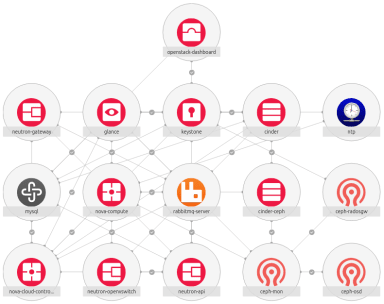
Canonical is proud to announce the availability of OpenStack Charms 20.02. This new release introduces a range of exciting features and several improvements which enhance Charmed OpenStack across various areas. CephFS backend for Manila The OpenStack Charms 20.02 release introduces support for Ceph File System (CephFS) to be used as stora

(Also published on my blog at robinwinslow.uk) Update: The default used in the official nginx docker image was changed from SIGTERM to SIGQUIT in November 2020, so this should no longer be an issue for Docker or Kubernetes users. nginx is a very popular web server. It may have just become the most popular web
Date: Nov 13-14Location: Messe Frankfurt, Frankfurt, GermanyBooth: 957 The TechWeek Frankfurt trade show will explore solutions to technology challenges organisations face across cloud computing and security, DevOps practices, Big Data management and more. With these major infrastructure themes in mind, the Ubuntu and Canonical team is ho

In this blog, we are going to explore how to leverage MAAS for hardware discovery and kernel auto-configuration using tags. In many cases, certain pieces of hardware require extra kernel parameters to be set in order to make use of them. For example, when configuring GPU passthrough we will typically need to configure the GPU

Private cloud, public cloud, hybrid cloud, multi-cloud… the variety of locations, platforms and physical substrate you can start a cloud instance on is vast. Yet once you have selected an operating system which best supports your application stack, you should be able to use that operating system as an abstraction layer between different c
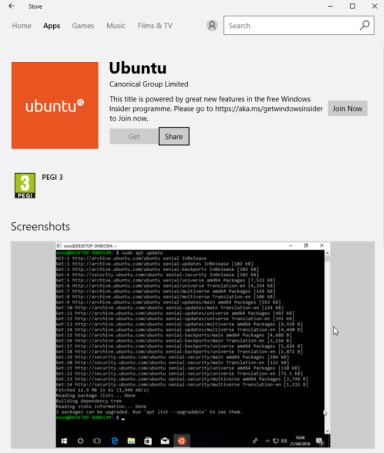
May 6, 2019: Canonical today announces full support for Ubuntu on the Windows Subsystem for Linux (WSL) 2. “Extending enterprise support for Ubuntu from Azure to Windows workstations and servers creates a seamless operating environment for Ubuntu in the Microsoft environment,” said Stephan Fabel, Director of Product at Canonical. “Collabo