
Blog posts tagged "kernel"

The purpose of this article is to share the technical realities of security patching for the Linux kernel, and the intended scope of the Linux kernel’s livepatch capability. We’ll cover when kernel live patching is most appropriate, and when updating deb and snap packages and then rebooting is the best option.

Canonical has been working with our testing lab partner, atsec information security, to prepare the cryptographic modules in Ubuntu 22.04 LTS (Jammy Jellyfish) for certification with NIST under the new FIPS 140-3 standard. The modules passed all of atsec’s algorithm validation tests and are in the queue awaiting NIST’s approval. We can’t

Learn how Canonical improves security on Linux with live kernel patching. Track Livepatch activity over time in Landscape.

Welcome to the concluding chapter of this three-part blog series on the low latency Linux kernel for industrial embedded systems. Each blog is standalone and can be read independently from the others, although you may want to start at the beginning for some continuity. If you need a quick refresher on userland and kernel space,
Welcome to Part II of this three-part blog series on adopting the low latency Linux kernel for your embedded systems. In case you missed it, check out Part I for a brief intro on preemptable processes in multiuser systems and memory split into kernel and user space. The low-latency Ubuntu kernel ships with a 1000
Welcome to this mini blog series on the low latency Linux kernel for industrial embedded systems! The real-time patch, which is not fully upstream yet, has had many developers wonder about stable alternatives for their projects adopting an embedded Linux operating system (OS) with latency requirements in the milliseconds’ range. The low-

Ubuntu is the platform of choice for deploying and running workloads on public clouds. No other operating system gives you better performance and consistency of experience across public clouds, including Amazon, Azure, Google, IBM and Oracle. There is a reason behind this exceptional experience. By design, Ubuntu images in public clouds i

Ubuntu 21.10 is the latest release of Ubuntu and comes as the last interim release before the forthcoming 22.04 LTS release due in April 2022. As the interim releases are often proving grounds for upcoming features in the LTS releases, this provides a good opportunity to take stock of some of the latest security features
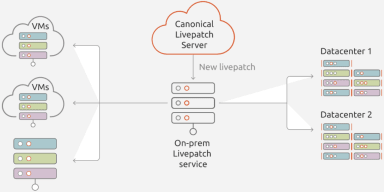
London, United Kingdom – Canonical announces Ubuntu Livepatch on-prem, an enhancement to its Ubuntu Livepatch service enabling organisations to take control of their kernel livepatching policy. Designed for complex enterprise environments that follow their own patch rollout policy, Ubuntu Livepatch on-prem provides the basis for an effici

Ubuntu Livepatch is the service and the software that enables organizations to quickly patch vulnerabilities on the Ubuntu Linux kernels. Livepatch provides uninterrupted service while reducing fire drills during high and critical severity kernel vulnerabilities.

Ubuntu 21.04 is the latest release of Ubuntu and comes at the mid-point between the most recent Long Term Supported (LTS) release of Ubuntu 20.04 LTS and the forthcoming 22.04 LTS release due in April 2022. This provides a good opportunity to take stock of some of the latest security features delivered in this release,

Broadly speaking, the Linux community can be divided into two camps – those who upgrade their operating systems in-vivo, whenever there is an option to do so in their distro of choice, and those who install from scratch. As it happens, the former group also tends to rarely reinstall their system when problems occur, while
Weighing the options with an Ubuntu 16.04 upgrade Ubuntu 16.04 LTS Xenial Xerus is transitioning from its five-year standard security maintenance window in four months, leaving many asking the question: can I manage an Ubuntu 16.04 LTS upgrade by April 2021, or do I need more time to plan this migration? In the Less than

The second generation of AMD EPYC central processing unit (CPU), codenamed Rome, provides outstanding performance and “hardened at the code” security. It was launched in 2019 and has already been widely adopted. Support for AMD EPYC Rome has been merged to the Linux kernel starting with 5.4 series. Therefore, all Ubuntu releases with 5.4
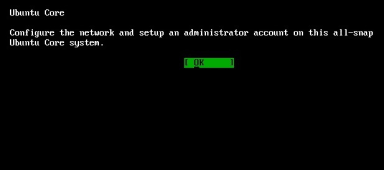
This article is written by Taiten Peng. Have you got i.MX6 hardware and are wondering how Ubuntu Core would run on it? In this blog, we will build an Ubuntu Core 18 image with the generic Ubuntu kernel for an i.MX6 based Boundary Devices board. The Nitrogen6X hardware from Boundary Device is well supported upstream
Ubuntu 20.04 LTS has just arrived. The latest LTS comes with a new version of the Linux kernel – 5.4 – which brings a lot of exciting new features, faster boot times, enhanced performance and security. Additionally, the Canonical kernel team ran benchmark tests to validate the performance improvements of the new kernel. Defining which