
Blog posts tagged "ROS"

The end of 2019 brings about the latest ROS 2 release – Eloquent Elusor. Despite an ever growing set of features and some changes throughout the ecosystem, packaging with snaps is as easy as always. Let’s go through a quick example! Prerequisites You’ll need two tools: “snapcraft,” the program that builds snaps, and “multipass,” the
November, for robotics, was a good month. We’re seeing new things develop, current projects finish and more cute animals in our future. So who can complain? The news we’re covering here are things that have crossed our path and that we’ve found interesting. If you have suggestions for next months post or your own projects

What an exhausting, yet intriguing few days. Huge thanks to Open Robotics et. al. for hosting and setting it up. The fantastic community came in full force with far more people than last year, more people than ROSCon JP and more people than I would have ever guessed. Which is to say, there were more
October came, and October went. Happy November everybody. This month, since last month was quite Ubuntu robotics heavy, the focus is more on you. For you. Community news. But before we get to that, there are several updates from October to cover just in case you missed them. First, this month Canonical, the company that
We recently got an interesting question from a customer, and I think the answer might be helpful to a wider audience. Python 2 will reach end of life in two months. This shouldn’t be news to anyone who hasn’t been living under a rock, and plans are in place to use Python 3 in Noetic

Hey everyone, listen up, ROSCon 2019 is days away, and the Ubuntu team is going to be there. If you’re coming to Macau be sure to come and say hi at booth 22. Mention reading this blog and get a free high five? It’s going to be an event to remember. If you were at
The Ubuntu robotics team presents, The State of Robotics. A monthly blog series that will round up exciting news in robotics, discuss projects using ROS, and showcase developments made by the Ubuntu robotics team and community. Every day, people make contributions to the world of robotics. And every day, work goes unnoticed that could cha
We at Canonical have been hard at work on the security features of version 2 of the Robot Operating System (ROS 2). However, if we lift our collective heads up out of the weeds it’s easy to see folks completely misunderstanding how security works today in ROS 2. We’ve written some design articles to help

ROSCon Japan 2019 was a resounding success. We took in the keynote speech from Ryan Gariepy, Co-founder and CTO of Clearpath Robotics. We demoed the first iteration of a Robotics arm from Niryo. Our own Ted Kern gave a lightning talk on type-checked Python in ROS 2, and we spoke to lots of individuals in
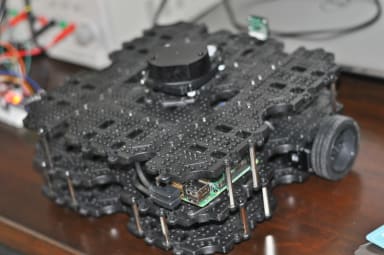
TurtleBot3 was released in 2017 and is positioned as a low-cost, open-source robot kit. For new owners of the TurtleBot3, there are various resources online that will assist you with building your brand new TurtleBot3 out of the box. One such example is the official TurtleBot3 instructional video. While it is a great video to
We at Canonical care deeply about robotics. We firmly believe that robots based on Linux are cheaper to develop, more flexible, more secure, and faster to market. One of the contributing factors to this being the case is the Robot Operating System (ROS). ROS is by far the most popular middleware for creating Linux-powered robots.
A well configured linter can catch common errors before code is even run or compiled. ROS 2 makes it easy to add linters of your choice and make them part of your package’s testing pipeline. We’ll step through the process, from start to finish, of adding a linter to ament so it can be used
One of the most common complaints from developers moving into large Python codebases is the difficulty in figuring out type information, and the ease by which type mismatch errors can appear at runtime. Python 3.5 added support for a type annotation system, described in PEP 484. Python 3.6+ expands this with individual variable annotation
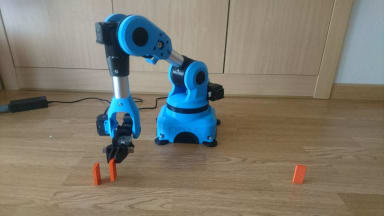
Niryo has built a fantastic 6-axis robotic arm called ‘Niryo One’. It is a 3D-printed, affordable robotic arm focused mainly on educational purposes. Additionally, it is fully open source and based on ROS. On the hardware side, it is powered by a Raspberry Pi 3 and NiryoStepper motors, based on Arduino microcontrollers. When we found
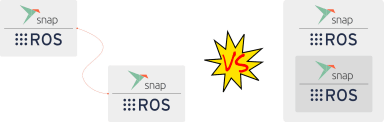
A while back I wrote a post about distributing a ROS system among multiple snaps. If you want to enable some sort of add-on story, you need to have multiple snaps, and that remains the way to do it today with ROS. That approach works, but I’ll be the first to admit that it’s not
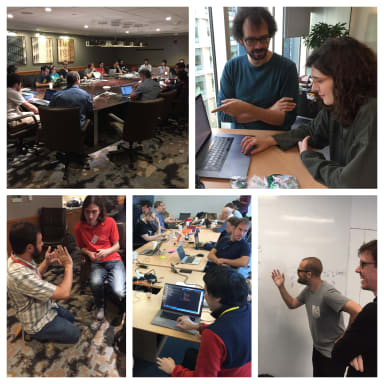
Following previous events in New York, Seattle, and London, the fourth Snapcraft Summit is taking place in Montreal, Canada from June 11th to 13th 2019. We have partnered with Travis CI this time and also expanded the scope of the event to three tracks. Snapcraft Summit Snapcraft is the universal app store for Linux that