
Blog posts tagged "Server"

The CIS benchmark has hundreds of configuration recommendations, so hardening and auditing a Linux system manually can be very tedious. Every administrator of systems that need to comply with that benchmark would wish that this process is easily usable and automatable. Why is that? Manual configuration of such a large number of rules lead
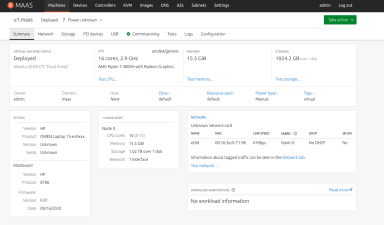
Back a few months ago, we did a feature poll on our MAAS forum, and the most-requested new feature turned out to be “Recommission/rescan a machine after it has been deployed“. With the release of MAAS 3.1, we’ve added that feature, making MAAS an even better choice for linux deployment tools. Here’s a sample of

We are happy to announce that MAAS 3.1 has been released. Bare metal provisioning just got even easier! MAAS 3.1 brings some of the most frequently-requested features into the product. A lot of this is serendipity — or maybe you could say that it’s about like minds tracking the same problem. Either way, we’re doing

Ubuntu Server 21.10 (Impish Indri) expands on edge use cases with a minimised system installation option in the Ubuntu Server Live Installer, and native, certified drivers for NVIDIA vGPU software on Ubuntu 20.04 LTS and 18.04 LTS, fully supporting sophisticated AI/ML workloads.

KVM (Kernel-based Virtual Machine) is the leading open source virtualisation technology for Linux. It installs natively on all Linux distributions and turns underlying physical servers into hypervisors so that they can host multiple, isolated virtual machines (VMs). KVM comes with no licenses, type-1 hypervisor capabilities and a variety
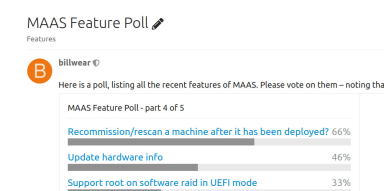
We want to make it possible to deploy MAAS in an existing datacenter, and have it keep track of machines that already have a deployed workload — without disturbing machine or workload. Currently, in order to get a machine into MAAS, with correct hardware information, you have to network boot the machine and let MAAS

This is the first article in a two-article series regarding FIPS 140 and Ubuntu. The first part of this series, this article, covers running FIPS 140 applications on Ubuntu while the second part, is covering the development of FIPS applications on Ubuntu. What is FIPS and why do I need it? Even though cryptography is

This blog title should really be, “Why you always, always, always want conflict detection turned on on all the networks MAAS touches,” but that’s really long as a title. But hear me out. As promised, here is another DHCP blog, this time explaining how you can have multiple DHCP servers on the same subnet, serving
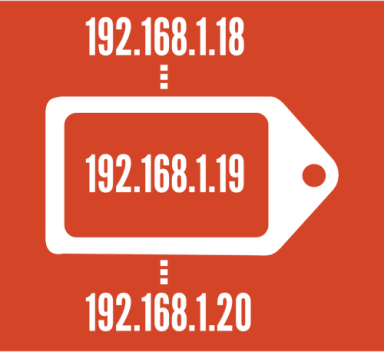
It’s possible to have more than one DHCP server on the same network and still have everything work right, with no conflicts and no dropped packets or IP requests. It’s really not that hard to pull together, either, but there are some things to know, and some things to consider before we investigate that situation.
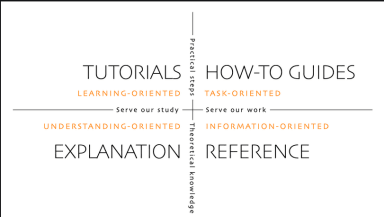
We discovered the Diátaxis Framework earlier this year. It’s been on our roadmap to shift MAAS doc to this cool new way of explaining things. This cycle, we plan to make it happen. You’d think it would be obvious…. Diátaxis is one of those ideas. Once you see it, you can’t figure out why everybody

We are happy to announce the release of MAAS 3.0. This release provides some new features and bug fixes. Here’s the tl;dr summary: PCI and USB devices are now modelled in MAAS PCI and USB device tabs are now available in machine details IBM Z DPM partitions are supported for MAAS and virtual machines Proxmox
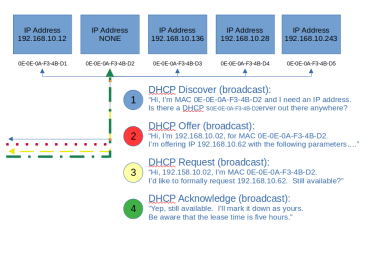
Let’s step back and take a very basic look at DHCP. In fact, let’s look at the analogy of assigning a street address to your house. Usually, this is done by the local 911 dispatch office, or some other central authority. They typically use either a survey map or a latitude, longitude pair to locate

Using Ubuntu for your ECS clusters on-prem or elsewhere will allow you to run your ECS Anywhere workloads with optimal performance everywhere you need it.

This article originally appeared on Cody Shepherd’s blog. 1.19 Platform Images Now Live Following the GA of Kubernetes 1.19 support in AWS, EKS-optimized Ubuntu images for 1.19 node groups have been released. The ami-id of this image for each region can be found on the official site for Ubuntu EKS images. Like the 1.18 platform

Ubuntu has evolved a lot since its early beginnings as an easier-to-use derivative of Debian that catered primarily to the nascent Linux desktop market. Today Ubuntu is deployed beyond just your laptops at home and in the office. Nowadays you are more likely to find Ubuntu in the cloud, powering some of the world’s best

Welcome back to our series on MAAS CLI operations. In our previous post, we learned how to acquire and deploy machines using the MAAS CLI. It was also evident that the JSON output from the allocate and deploy commands was very lengthy for even one machine — so you can imagine how large a list